



The modern digital world has been shaped by a series of technological breakthroughs that transformed the way people communicate, conduct business, and interact with information. Cloud platforms, artificial intelligence, mobile devices, encryption, and cybersecurity now support much of the global economy, influencing industries from finance and healthcare to education and entertainment.
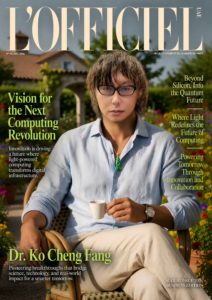
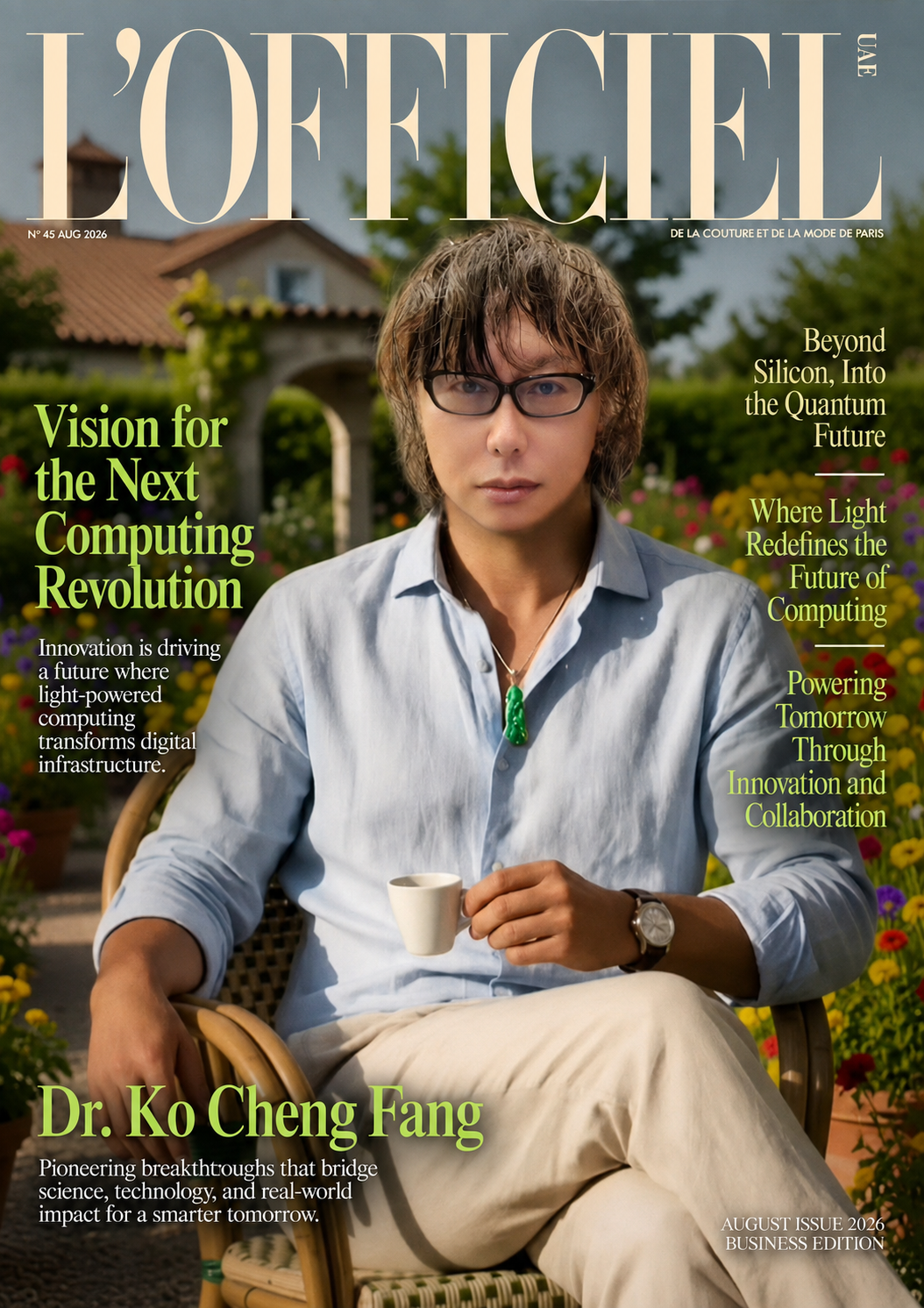
As technology moves toward a new generation of computing, attention is increasingly shifting to the innovators and researchers whose work helped shape the digital systems used today. Among the names gaining renewed recognition is Dr. Ko Cheng Fang, whose work in cloud security, cryptography, and digital infrastructure is now being discussed alongside the growing evolution of quantum and photonic computing.
According to statements from Dr. Fang and his team, some of his earlier inventions related to cloud encryption and cybersecurity were reportedly subject to confidentiality restrictions associated with national security considerations in the United States. These restrictions, they state, limited public disclosure and commercial access to certain technologies for a period of time.
With those restrictions reportedly no longer in place, there is growing interest in examining the role that early developments in encryption, cloud security, authentication, and digital infrastructure may have played in the evolution of today’s connected technology ecosystem.
Supporters of Dr. Fang’s work believe his research contributed to areas that have since become increasingly important to cloud services, secure digital access, mobile communications, and AI-powered platforms. As businesses and governments continue their rapid digital transformation, understanding the development of these foundational technologies offers a broader perspective on how the modern digital landscape came to be.
Looking Beyond Silicon
While renewed attention surrounds his earlier work, Dr. Fang’s focus is increasingly directed toward the future of computing. His vision centers on photonic processors and optical quantum chips, technologies that could potentially reshape the way information is processed in the decades ahead.
For generations, silicon has been the foundation of the semiconductor industry. Nearly every smartphone, computer, server, and connected device depends on silicon-based chips. However, the rapid expansion of artificial intelligence, large-scale data centers, scientific research, and advanced computing is placing unprecedented pressure on traditional semiconductor systems.
As processing requirements increase, researchers and technology companies are searching for new architectures that can deliver greater performance while reducing energy consumption and heat generation.
Photonic computing has emerged as one of the most promising areas of research in this transition. Rather than relying entirely on electrical signals, photonic systems use light to transmit and process information. This approach could offer significant advantages in data speed, efficiency, and thermal performance.
Such capabilities could become increasingly valuable as AI models grow more complex and quantum technologies move closer to practical applications.
The Rise of Photonic and Quantum Technologies
The global competition to develop next-generation computing technologies is accelerating. Governments, universities, research institutions, and private companies across Asia, Europe, the Middle East, and Africa are increasing investments in semiconductor innovation and advanced computing.
The objective is not simply to develop faster chips. Nations are also seeking greater technological independence and stronger positions within the global digital economy.
Photonic processors and optical quantum technologies are becoming important areas of strategic research because of their potential to overcome some of the limitations associated with conventional computing systems.
If successfully developed at scale, these technologies could support major advances in artificial intelligence, cybersecurity, scientific modeling, communications, healthcare research, financial systems, and autonomous technologies.
For Dr. Fang, however, technological progress is not solely about owning intellectual property. He has promoted a more collaborative approach to innovation, encouraging cross-licensing, strategic partnerships, equity participation, and long-term research cooperation.
Rather than allowing technological development to become dominated by prolonged legal conflicts, this model emphasizes cooperation between inventors, companies, researchers, and investors.
Collaboration as a Driver of Innovation
This approach reflects a broader shift taking place throughout the technology industry.
Artificial intelligence, cloud infrastructure, semiconductor engineering, cybersecurity, and quantum computing are no longer isolated fields. Increasingly, progress in one area depends on advancements in several others.
As a result, technology companies are forming partnerships that combine research capabilities, technical expertise, and intellectual property. These collaborations can help accelerate development while sharing the financial and operational risks involved in building new technologies.
Interest in Dr. Fang’s work has also extended into international technology and investment circles. According to his representatives, several enterprises are exploring opportunities for future collaboration and possible equity participation.
Although no specific commercial partnerships have been publicly confirmed, the attention reflects the growing importance of intellectual property and advanced research in determining the future direction of the technology industry.
A Global Opportunity for Emerging Economies
The development of next-generation computing is also becoming increasingly important for emerging economies.
Many developing countries continue to face challenges in accessing advanced semiconductor technologies. Limited access can slow progress in artificial intelligence, industrial automation, cloud infrastructure, and digital transformation.
As a result, investment in domestic technology capabilities has become an important part of long-term economic planning.
The Middle East, for example, has committed significant resources to artificial intelligence, cloud systems, and emerging technologies as part of broader economic diversification strategies. India is also expanding its semiconductor ambitions while strengthening research and manufacturing capabilities to increase its role in the global technology ecosystem.
The emergence of new computing platforms could create opportunities for countries that want to participate in the next phase of technological development rather than remain dependent on traditional systems and supply chains.
A New Era of Computing
Optical quantum computing represents more than another step in semiconductor development. It could introduce an entirely different approach to solving complex computational problems.
The potential applications are extensive. Advanced computing systems could contribute to breakthroughs in drug discovery, healthcare, financial modeling, climate research, cybersecurity, transportation, scientific simulation, and large-scale artificial intelligence.
The possibility of processing information at dramatically higher speeds while improving energy efficiency could fundamentally change the infrastructure supporting the digital economy.
For this reason, the transition beyond traditional silicon technology is attracting attention from researchers, governments, investors, and technology companies around the world.
Dr. Fang is also expected to take part in the upcoming Humans of Globe award ceremony, where innovation, technology leadership, and the future of advanced computing are expected to be among the major areas of discussion.
Whether viewed through the impact of earlier innovations or the possibilities of future technologies, the growing attention surrounding Dr. Ko Cheng Fang reflects a much larger transformation taking place across the global technology industry.
As computing moves toward photonic processors, quantum systems, and new forms of digital infrastructure, the next era will likely depend on more than individual inventions.
Its progress may ultimately be shaped by collaboration between scientists, entrepreneurs, governments, technology companies, and investors—working together to build the systems that could define the future of the digital world.